
General Bargaining Updates: Sign-Offs and More
This Bargaining Report can begin with some positive news: the parties have signed off on revisions to article 10.07 (U1) and 23.03.1 (U2). The former requires the Employer to inform both the Union and affected members if it appears possible that Grant-in-Aid payments will arrive late. The latter requires the Employer to inform eligible members of their inclusion within the Affirmative Action (Conversion) Pool by 1 November of each year. Soon, too, the Union will be able to report on the appointment of a Conciliator, who will hopefully aid negotiations going forward.
Progress, otherwise, remains slow. Too often the Employer appears to discover new aspects of their own job in real-time, which does not make for efficient deliberation on the relative merits of either side’s proposals. This has been especially true of our discussions on AI.
Further Negotiations: Artificial Intelligence
Nearly all of our meeting on September 29 was devoted to artificial intelligence. This was not the first time the two parties debated the subject; it will not be the last. Membership approved a proposal on AI predicated on consent, accountability, information security, academic freedom, and the unequivocal privileging of human labour in post-secondary teaching and research. The Employer countered with a facile commitment to think about things further, eventually, to no particular end, without clear remit, some two years into the future.
On Tuesday, the Employer conceded a new counter. The “Ad Hoc Committee to Discuss Artificial Intelligence” was out; a “Joint Working Group on the Use of Artificial Intelligence (AI) in the Workplace” replaced it. Its mandate to recommend (not effect) change remained the same, as too did deferral of its work until well into our next collective agreement. There was one significant difference: the Joint Working Group now submitted its recommendations to York’s Vice-President Equity, People and Culture, who, under threat of grievance, would be obligated to read its report.
We are not interested in mandating an audience for our thoughts on AI. A chatbot could satisfy that craving. There, at least, we’d get a quicker response. But the Employer insists that the complexity of the issue requires slow and careful deliberation; similar thoughtfulness was not required in introducing those same AI features across the University. And to what end? To “Help me do my o b.” (as suggested by a Board of Governors agenda)?
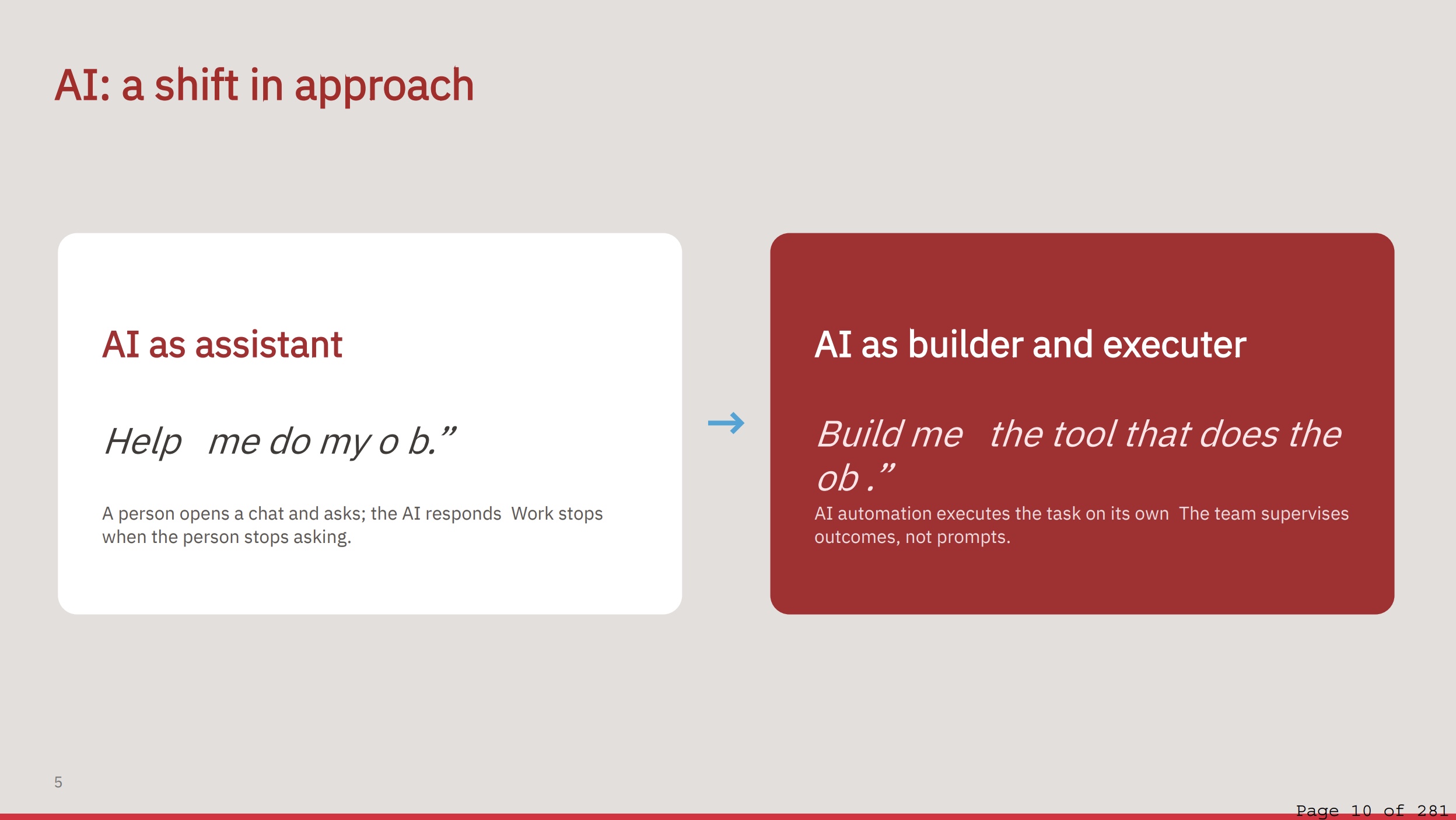
Here, as elsewhere, the Employer’s Bargaining Committee has struggled to articulate a specific vision for York University. Indeed, they have claimed that imagining any future at all is beyond the scope of their mandate. They are quite certain that the conditions undergirding teaching and research are independent of what post-secondary education will look like in 2029. Perhaps they truly believe that. We certainly don’t. But in their frequent, unyielding invocation of a single justification for most of their proposals, they’ve articulated what they value most about that future university: “managerial rights”.
What are “managerial rights”? Everything, of course, absent powers to depress them. The Employer demands “flexibility” in developing and compelling AI use at York University. Maybe they will evaluate our members with AI tools. Maybe they’ll do the same to students. Maybe they’ll displace work onto AI tutors. Maybe. They cannot say what the future holds — managerial rights means never having to explain oneself — only that they reserve the right to determine it. It is, to quote another favourite term of theirs, “natural law”.
AI Issues in 3903’s Bargaining: History and Context
And “why now?”, they wonder. Why so much concern over AI? Why, they ask, did the Union not bargain for this in 2023, when the relevant technologies were newer and less powerful? When they weren’t already being integrated into the everyday operations of the University? When there was less money at stake?
We did. In fact, we proposed in 2023 that the Employer provide written notification of any “new or existing practices with respect to computing or information technology that, if implemented, will directly affect employees and/or conditions of employment”. To this modest request, we proposed that, following such notice,
the employer and the union will discuss establishing a Joint Committee to consider the implications of this new technology and to make recommendations to the Employer, including suggestions for minimizing any negative impact to employees directly affected by the changes.
The Employer refused to acknowledge our proposal until 5 April 2024. When asked why, Dan Bradshaw, then York University’s Assistant Vice-President Labour Relations, replied:
The University is not inclined to address technological change beyond what is already stated in the collective agreement. It would be premature to address the yet undefined scope of AI technology in a collective agreement.

Has enough time passed, or should we wait until the next round of bargaining? When can we be trusted to evaluate the world we live in?
Given the opportunity in 2023-2024 to collaborate on interpreting the role of AI at York University, the Employer chose instead to strengthen its “managerial rights”. They made their decision. They are making the same decision again. That is their managerial right. In both instances, they must live with the consequences. That is their managerial privilege. But we shouldn’t have to. That is our responsibility. Managerial rights will be claimed wherever the Employer can find them. Organized workers, bargaining collectively, can halt their expansion. They can even take those rights back.
The Union refuses to pretend that we aren’t negotiating the future. We therefore ask everyone at York University what they value more: a voice in shaping post-secondary education or their manager’s right to speak for everyone?
In solidarity,
CUPE 3903 Bargaining Team (Units 1, 2, & 3)
bargaining@cupe3903.org
Click here to read previous BT reports, and check the calendar for upcoming bargaining-related happenings.